To hit the target
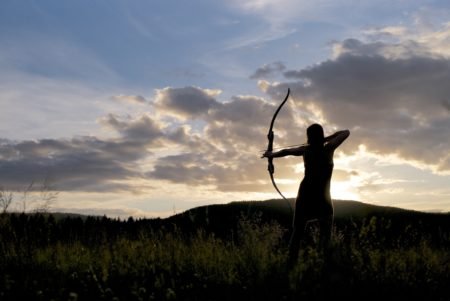
In the Amshu Tantra (1000s) and further through Tattwa Chintamani (in 1577) positions are given that are reminiscent of a straight stick, a stick broken into several parts in shape, or arcuate shapes. These are called dandas (sticks) and are also the names used for the positions in the sun salutation. One of the positions used in variations of the sun salutation was Dhanurasana (The Arch).
The archery theme is a theme we encounter both in the Vedic tradition as well as the Chinese Daoist (Tao) tradition.
In the Vedic tradition, we meet the one in the main character Arjuna who is archery in the text Bhagavad Gita. The text is highly symbolically written and one can therefore assume that the archery theme is the same.
In Daoism, the archery theme is found in the form of spiritual discipline / practice both among Daoist monks as well as among monks in Daoist-influenced Zen Buddhism. This archery practice was used to practice the ability to concentrate and hit one’s goal, both physically and in life at large.
In Christianity, there is the term sin, a word translated from the original language of the New Testament; Aramaic, translated as “to miss the mark”.
When do we miss the mark? The Vedic tradition and Daoism would say when we lose concentration, lose our balance, misunderstand and do not see clearly. The opposite of this would then be to be in balance, aware and clear-sighted.
The difficult times many of us have gone through in recent months may have contributed to a greater vision. Greater clarity usually leads to earlier destructive patterns becoming clearer to us.
We seem to be in a time when we have an opportunity to stop repeating old patterns, get rid of what limits us, and dare to go our own way.
If we dare to do this, there are good chances of success.
This strength of going our own way is based on past experience, and overcoming resistance, and is something we have had to earn.
It is also a time to use your creative ability, and give your life a direction.
Music: Sevati, Mirabai Ceiba