To be worthy

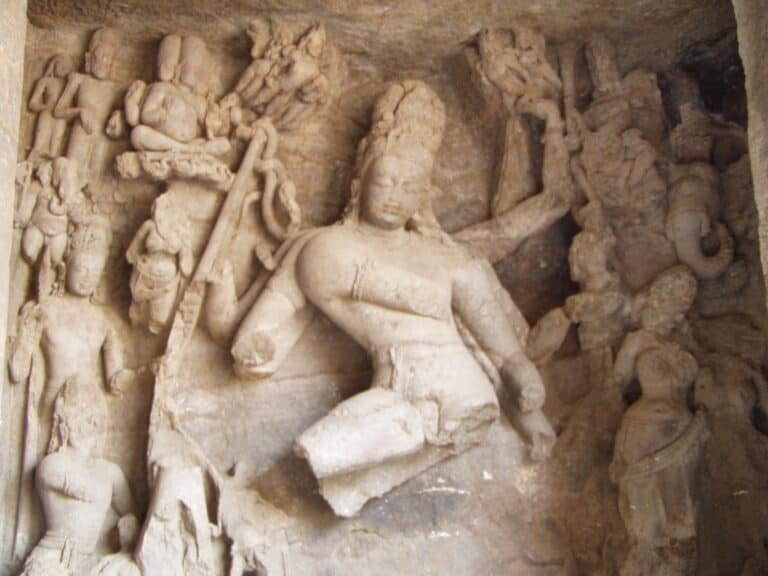
A legend from the 12th-14th century described in the text Matsyendra Samhita describes how the fisherman Mena is swallowed by a whale.

The story tells how Mena is devoured by a choice and thereby hears secret teaching from Shiva when, at Shakti’s request, he teaches her the ultimate being of everything, at the bottom of the sea. 

When Mena proves receptive to teaching, Shiva appoints Mena to be the one to bring this knowledge to the people. Mena is named Matsyendra by Shiva, which means “king of fishes”. 

The rest of the story tells about the difficulty of finding someone who understands the knowledge, and has sufficient will to live by it. 

The historical figure Matsyendra probably lived around the ninth century. Matsyendra was one of the most acclaimed tantric masters. Together with his partner Konkanamba, he was praised as a champion.

The story has its points of contact not only with Jonah and the election story in the Old Testament, but also with the story in the New Testament where Jesus resembles the kingdom of heaven with a king inviting to his son’s wedding. 

First, those who are selected are invited. When they do not think it is important enough to come, the king invites everyone from the street. 

One of those invited does not respect the invitation enough to dress in his finest clothes. This person is thrown into the dark. 

The story ends with the famous verse: 

“For many are called, but few are chosen.”

Perhaps these stories can be understood as meaning that he who is not worthy to receive, by turning away from that which is of value or not revering it, cannot receive it. 

Music: Spring, Playlist.


Similar Posts

  • Together in love

    It is said in the Tantric tradition that “The Source” contains all the potentiality possible. It is also said that the purpose of the manifestation is to make the great consciousness aware of itself. In other words, a self-reflective process. Consciousness is referred to here as prakasha (the great light) and the reflection process as…

  • Being with truth

    One student asked me after the last post, this appropriate question: So if you want to go through the process of Yoga, of facing truth more and more, how do you do it? Last time, we talked about Yoga as a truth-seeking tradition, and about unveiling layers of untruth and faulty knowledge. We also talked…

  • To bear his pain

    The new moon 23/2 falls in the area of the sky called Shatabhisha nakshatra. Shatabisha means 100 healers. It is a time that benefits healing from illness or trauma. Mercury has a strong influence this time as well, making old pain prone to coming to the surface.  The tantric exercises aimed to release energy that…

  • To hit the target

    In the Amshu Tantra (1000s) and further through Tattwa Chintamani (in 1577) positions are given that are reminiscent of a straight stick, a stick broken into several parts in shape, or arcuate shapes. These are called dandas (sticks) and are also the names used for the positions in the sun salutation. One of the positions…

  • Shivaratri

    Shivaratri falls this year on Friday 21/2. This is an important tantric feast.  Shivaratri means Shiva’s night. It occurs when the moon is only visible as a thin glow in the sky. It is the darkest of the moon’s 16 phases.  The moon symbolizes the mind and the mind is said to move inwards along…

  • Yoga as a truth-seeking

    Tantra speaks of the actions of “the All”, which are also the individual’s 5 powers. These are: Srsti-creation Stihiti-stasis Samhara-dissolving Tirodhana-forgetting, veiling Anugraha-unveiling, remembrance These actions are the acts of consciousness. Consciousness can create a thought, hold on to a thought, let a thought dissolve, and can forget something by dropping the focus on it….