Being with truth

One student asked me after the last post, this appropriate question: So if you want to go through the process of Yoga, of facing truth more and more, how do you do it?

Last time, we talked about Yoga as a truth-seeking tradition, and about unveiling layers of untruth and faulty knowledge.

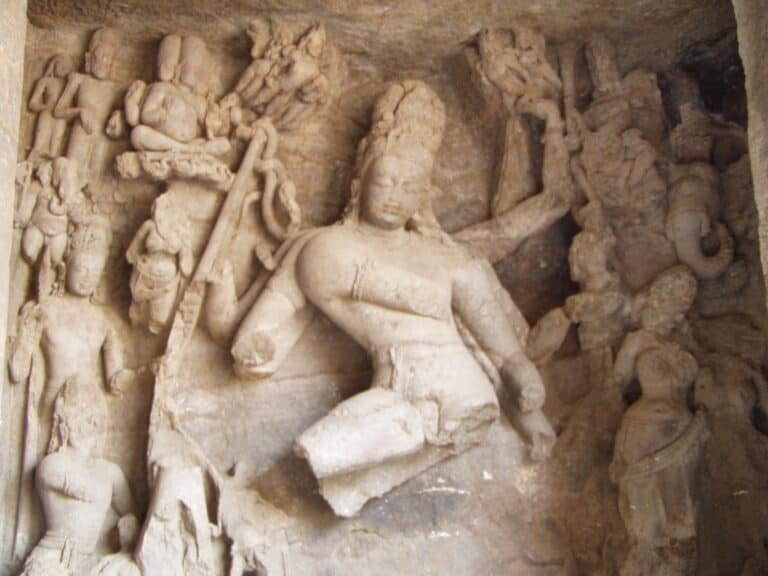
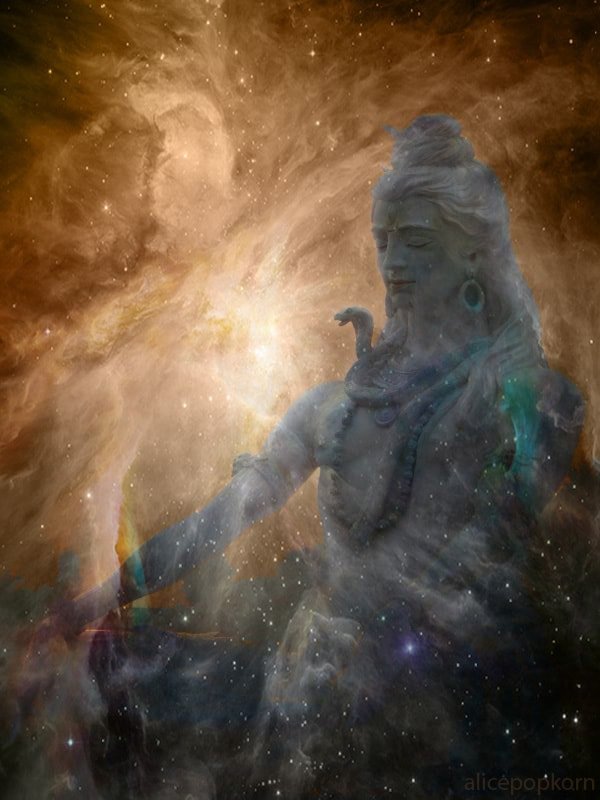
We also talked about the myth of Shiva, when he kept the poison, which had come up through this process of truth-seeking, in his throat.

This place at the neck is called Vishuddha in the Tantric tradition. Vi is a prefix that means special, and shuddha means pure. This is the place where, according to the tantric energy system of the body, the purification takes place.

As we talked about last time, Shiva represents consciousness.

The keeping of the “poison” or “darkness” in the throat represents the keeping of all the painful things in life, in our consciousness.

So how is this done?

Most people recognize that the parts of our lives that we have not met fully or grieved clearly, seem to have a tendency to appear in new situations. That is, we often find ourselves in situations that remind us of the most difficult moments in our lives, even if we have done everything in our power not to have to experience it again.

The process of keeping something in consciousness until all its “poison” is forfeited seems to be the only cure. That is, to fully let the pain come when we are in a state where we are actually able to “hold it”, without going under.

So what constitutes the consciousness that can “hold” this?

This consciousness is an integrated consciousness.

Misconceptions about our history need to have been straightened out.

Misconceptions about our history are what we mentally have stories about, which do not match what the body remembers.

As long as these are not compatible, we are in constant internal conflict.

This consciousness also has a quality of “holding”, of love.  

Music: Live2love, Shantala.

 

Similar Posts

  • Together in love

    It is said in the Tantric tradition that “The Source” contains all the potentiality possible. It is also said that the purpose of the manifestation is to make the great consciousness aware of itself. In other words, a self-reflective process. Consciousness is referred to here as prakasha (the great light) and the reflection process as…

  • Living your dharma

    Psychoanalysis talks about sublimating traumas. This means allowing our lives to take the direction of working with our traumas. We often choose jobs and engagements that are linked to our traumas. If this is done unconsciously, it is called repetition compulsion, and leads to actions that forces us to repeat our original trauma time and…

  • Shunya

    Shunya is the yogic term for abyss. This condition is the part of a natural cycle that is between the completion of a cycle, and the beginning of a new one. This place has no characteristics. It lacks characteristics and can be experienced as a void, an infinite space or a dark depth. This is…

  • Sri Yantra

    What happens when contraction and expansion take place at the same time? Perhaps it is these circumstances that can create something truly new. A contraction to a nothing/ a small still point of concentrated energy, and then an explosion into a new creation. The Tantric tradition speaks of prakasha and vimarsha. Prakasha is the unmanifest…

  • To hit the target

    In the Amshu Tantra (1000s) and further through Tattwa Chintamani (in 1577) positions are given that are reminiscent of a straight stick, a stick broken into several parts in shape, or arcuate shapes. These are called dandas (sticks) and are also the names used for the positions in the sun salutation. One of the positions…

  • Ma!

    The Navaratri of spring is approaching. The 9 nights of Navaratri are sometimes divided into three parts. Three nights for the invocation of Durga, three for the invocation of Lakshmi and three for the invocation of Saraswati.  Durga is the aspect of the Goddess in its entirety; Mahadevi, who is summoned to fight Mahishasura in…